
Below the Line
A line producer's read of where AI is cutting into cinema
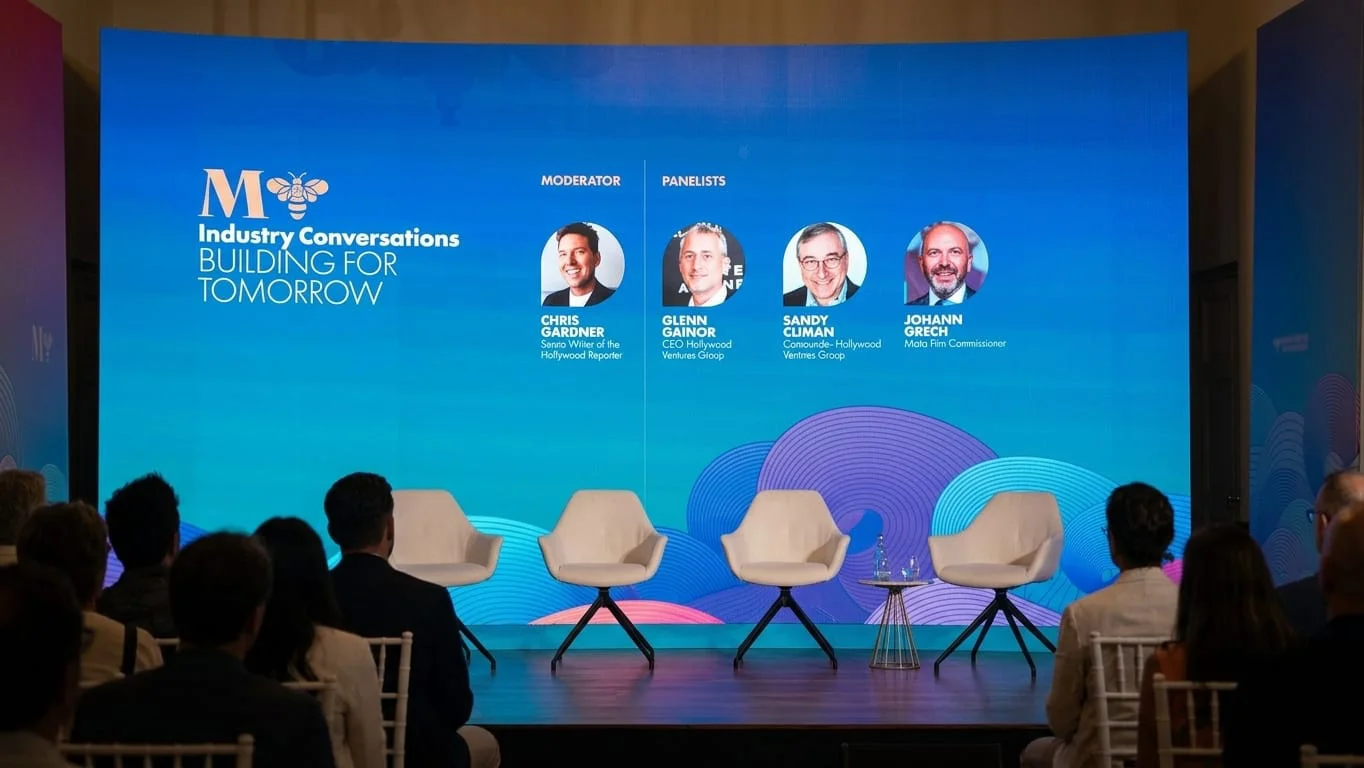
The Mediterrane Film Festival closed in Valletta at the end of June. A good week. My thanks to the festival team and the Malta Film Commission for the industry programme, the OFA labs, the panels, the masterclasses, and the patience of the people who ran them.
One thing followed me from room to room that week. Whatever the session was officially about, financing, co-production, craft, someone eventually asked about AI. Sometimes as a question. Sometimes as a joke that was not really a joke. It never stayed answered for long.
This piece comes from that week. Not from the loud end of the conversation, the actors and the synthetic faces, but from the end I work on. Budgets, schedules, scouting, and the way a project decides where it should be made.
Below the line.
The visible line
By mid-2026 the first round of rules is written, and it is worth reading what got protected.
The Academy moved on May 1. Acting nominations must go to roles demonstrably performed by humans with their consent. Screenplays must be human-authored. AI used elsewhere in the process neither helps nor harms eligibility. Cannes had already set the tone, its president insisting a film "is not an assembly of data; it is a personal vision," while AI-generated films stayed outside the Palme d'Or competition.
Then the contracts closed, one after the other. The WGA ratified in April. SAG-AFTRA followed on June 4, with a rule that producers may use a synthetic performer only where it brings "significant additional value" over a live actor, and no fresh strike leverage on AI for the life of the deal. The DGA closed the cycle before its own contract expired at the end of June. Three guilds, three four-year deals, all running to 2030.
Read it plainly. Performance, authorship and direction are now protected territory, negotiated line by line, in writing. Nobody negotiated an AI clause for the people below the line. There is no significant-additional-value test for a schedule, a budget or a location breakdown.
That is where the cut appears.
The studio calculation
The studio side is testing the numbers, and one test has published its results. CJ ENM's The House, a Korean AI-hybrid feature, went out on streaming on May 1. The actors were filmed indoors over four shooting days. Every background and visual effect was generated with AI. Around 337,000 dollars for the whole film, at least five times cheaper than a conventional version by the producers' own estimate. To their credit, they also admitted the seams show.
The lead producer said a scene of a character drinking coffee and a scene of that same character fighting a monster now cost roughly the same to make. Read that as a line producer. The cost of the performance is holding. The cost of everything around it is collapsing.
For a production hub like Malta, that matters. A project does not arrive here as a romantic idea. It arrives as a calculation. Malta enters because the location works, the rebate works, the logistics work. If software can model ten territories in the time it used to take to properly test two, every hub enters a wider competition. Malta does not automatically lose it. A 40 percent rebate, real water, real stone, English-speaking crews, tank work, period streets and compact geography remain serious advantages. But the first comparison may now happen before the local producer is in the room.
And watch where the money goes. In June, Google DeepMind put 75 million dollars into A24, tied to a research partnership sitting inside the studio's own workflow. The first project is reported to be a storyboard tool. The capital is not buying finished AI films. It is buying the pipeline.
Software old and new
Production has always used software. Movie Magic did not remove the line producer. It moved the paper into a cleaner system while the judgment stayed human. The new tools are different because they move closer to the first pass of judgment. Asteria's Continuum Suite, reported in March, takes a script and generates sides, call sheets, schedules, storyboards and production databases. The trade press called it an operating system for "below-the-line efficiencies." That is not a poster image. It is the machinery.
Here is the practical problem. A budget conversion is not a currency exercise. A UK or US budget becomes a Maltese budget when someone knows what survives contact with the ground. Which crew is actually available. Which supplier can deliver at that scale. Which permit looks simple and is not. Which rebate line is eligible in theory but weak in audit. That knowledge is local, physical and sometimes annoyingly specific. It can sit in a phone call, an old email, or the fact that one field in Mellieħa is no longer an option because the last production left it badly.
AI will get better at the first version of this work. Useful, yes. Complete, no. If the software does not know the real country, a destination can lose before anyone has spoken to the people who actually make it work.
The older story inside the new one
None of this panic is entirely new. Animation and VFX have lived through tool revolutions before, from painted cels to CAPS to Pixar. Phil Tippett's stop-motion was declared extinct around Jurassic Park, and the craft shifted around him instead of erasing him. The difference this time is that earlier tools extended a decision an artist had already made. AI can propose the image before the person has fully made the choice. Anyone claiming to know how that settles is probably selling something.
The failure signal
Not every AI promise becomes infrastructure. In December 2025, Disney announced a billion-dollar deal with OpenAI around the Sora video app. Investment, a three-year licence, more than two hundred characters. Three months later, OpenAI shut Sora down. No formal agreement signed. No money changed hands. Disney reportedly learned less than an hour before the announcement. Sam Altman's explanation was blunt: "It's always about compute."
A tool can be culturally loud and operationally fragile at the same time. Producers do not work in demos. They work in delivery. The image has to repeat, the rights have to clear, the risk has to be understood. A beautiful generated shot is impressive. A controllable pipeline is something else.
Where the cut falls
So the question is no longer whether cinema will use AI. The question is where the cut falls, and the first half of 2026 has answered part of it. The crafts the audience recognises as human are protected, in writing, until 2030. Below that, the ground stays open, and the contracts are silent about it. There is a timing problem inside that arrangement too. Four-year deals now govern a technology that moves in six-month cycles.
For crew, the fear looks immediate, but it is not entirely new. Work has always moved between departments. If a script needs a forest and Malta has none, you build one, you travel to one, or VFX paints one in. Days shift from one line of the budget to another. AI does not invent that trade. It changes the price of it, and how early it happens. For producers, the fear is different. Not only replacement, but the slow erosion of the judgment that used to be visible because it took time.
That may also be where the value moves. A first version of a schedule is useful. A rough budget comparison is useful. None of it is the work. The work is knowing where the first version is wrong. A saving that is not a saving. A location that will break the day. A line that looks clean until the rebate audit. These are not philosophical details. They are production.
In Valletta last month, that was the conversation running underneath all the others. I suspect it will be again next year.
Line producer by craft. Photographer by instinct. adelferrito.com